
The immune system plays a central role in the body’s ability to fight illness—including cancer. As alternative therapies like Fenbendazole gain attention, one key question emerges: does Fenbendazole support the immune system, or does it suppress it?
Let’s explore the early findings and implications for those using Fenbendazole for humans as part of an off-label cancer protocol.
Fenbendazole’s Primary Function: Anti-Parasitic, Not Immunomodulatory
Fenbendazole is a benzimidazole compound, primarily used as a canine dewormer and livestock antiparasitic. Its mode of action involves disrupting microtubules in parasites—causing them to lose structural integrity and die.
But microtubules aren’t just found in parasites. Cancer cells—and even immune cells—rely on them too.
This has led scientists to ask whether Fenbendazole’s effects extend to:
- Slowing cancer cell division (by disrupting their microtubules)
- Possibly influencing immune system function (by affecting healthy immune cells)
So far, no human clinical studies confirm either immune boosting or suppression—but animal studies and indirect effects offer some insight.
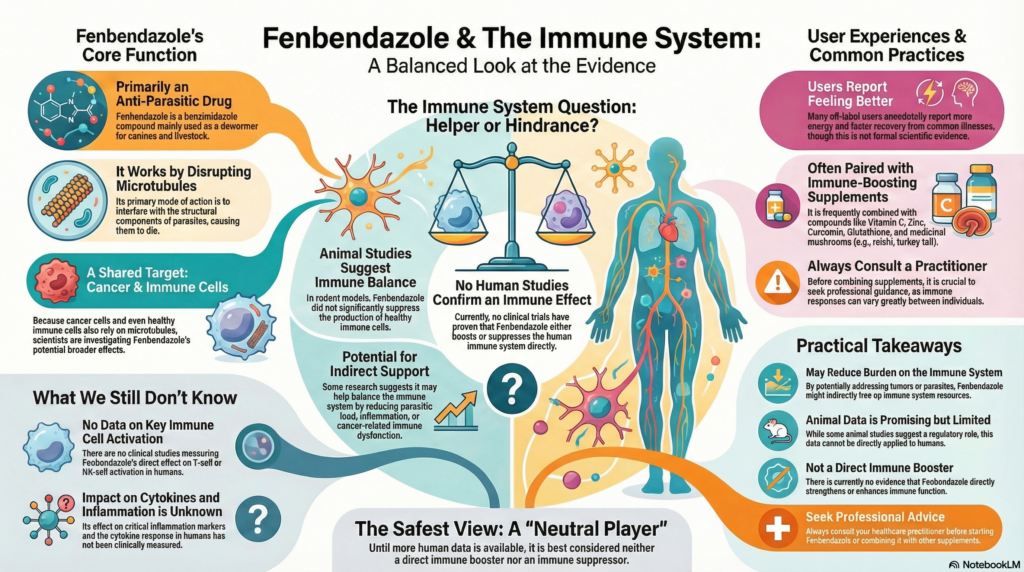
Animal Studies Suggest Potential Immune Balance
In preclinical models, some researchers have observed a normalization of immune response when using Fenbendazole alongside other compounds.
Key highlights:
- In rodent models, Fenbendazole did not significantly suppress healthy immune cell production.
- Some studies suggest it may support immune balance by reducing parasitic load, inflammation, and cancer-related immune dysregulation.
This makes it especially interesting for people with cancer, where immune function is often impaired by tumors or treatments like chemo and radiation.
Anecdotal Reports from Users
Among those using Fenbendazole for cancer, many report feeling more energized, recovering from colds faster, or experiencing fewer secondary infections.
While these reports are not formal evidence, they’ve contributed to the curiosity around Fenbendazole and immunity.
Some speculate that by helping reduce tumor burden or inflammation, Fenbendazole may indirectly allow the immune system to recalibrate.
Can It Be Combined with Immune-Supportive Supplements?
Many individuals exploring Fenbendazole also include immune-supporting compounds in their regimen, such as:
- Medicinal mushrooms (like reishi or turkey tail)
- Vitamin C
- Zinc
- Curcumin
- Glutathione
Always consult with a provider before combining supplements. The Fenbendazole dosage often used in cancer support (e.g., 222mg for 3 days on, 4 off) is considered safe by many—but immune responses can vary by individual.
What We Still Don’t Know
No clinical studies have conclusively measured Fenbendazole’s direct effect on:
- T-cell or NK-cell activation
- Cytokine response
- Inflammation markers in humans
Until then, it’s safest to consider it a neutral player—not an immune booster, but not an immune suppressor either.
Practical Takeaways
- Fenbendazole may help reduce the burden on the immune system by addressing parasites or tumors.
- Some animal studies suggest possible immune regulation, but data is limited.
- There is no evidence it directly strengthens immunity.
- It may be safe to combine with immune-boosting supplements—but always consult your practitioner.