
For many exploring Fenbendazole for humans, the big questions are often about starting—but just as important is knowing what to expect when you stop.
Whether you’re finishing a short-term protocol or reassessing your long-term health plan, it’s helpful to understand the potential effects of discontinuing Fenbendazole.
Why People Stop Taking Fenbendazole
There are several reasons individuals may pause or stop taking Fenbendazole:
- They’ve completed a planned cycle or “off days”
- Symptoms have improved or stabilized
- Side effects such as nausea or digestive upset occur
- A healthcare provider advises discontinuation
- They’re switching to another therapy
Because Fenbendazole is often taken in an off-label, self-directed context, stopping is usually a personal decision—but should be guided by clear reasoning and, ideally, medical input.
Is There a Withdrawal Effect?
Currently, no clinical evidence supports the idea that Fenbendazole causes withdrawal symptoms in humans. It does not create physical dependence like opioids or steroids.
That said, people may feel different after stopping. Common experiences include:
- Return of mild symptoms that had subsided
- Slight fatigue or brain fog
- Anxiety about recurrence (especially in cancer cases)
These reactions are often more psychological than pharmacological, but still very real for the person going through them.
Do Cancer Symptoms Return After Stopping?
This is one of the most commonly searched concerns—especially in the Fenbendazole cancer protocol community.
Important considerations:
- If Fenbendazole was slowing tumor growth, stopping could remove that support
- If it was reducing inflammation or immune burden, those effects may fade
- For some, there’s no noticeable change at all
Because there’s no formal data, experiences vary widely. Some people cycle off without issues; others notice subtle shifts in energy, clarity, or symptom management.
How to Safely Taper Off (If Needed)
Although tapering isn’t medically necessary with Fenbendazole, some prefer to reduce gradually rather than stop abruptly.
Here’s a common method:
- Reduce frequency (e.g., 2x/week instead of 3x/week)
- Lower the dose (e.g., 111mg instead of 222mg)
- Increase “off” days before stopping altogether
Always track how your body responds. Journaling physical and emotional shifts during this time can be helpful.
How to Support Your System After Stopping
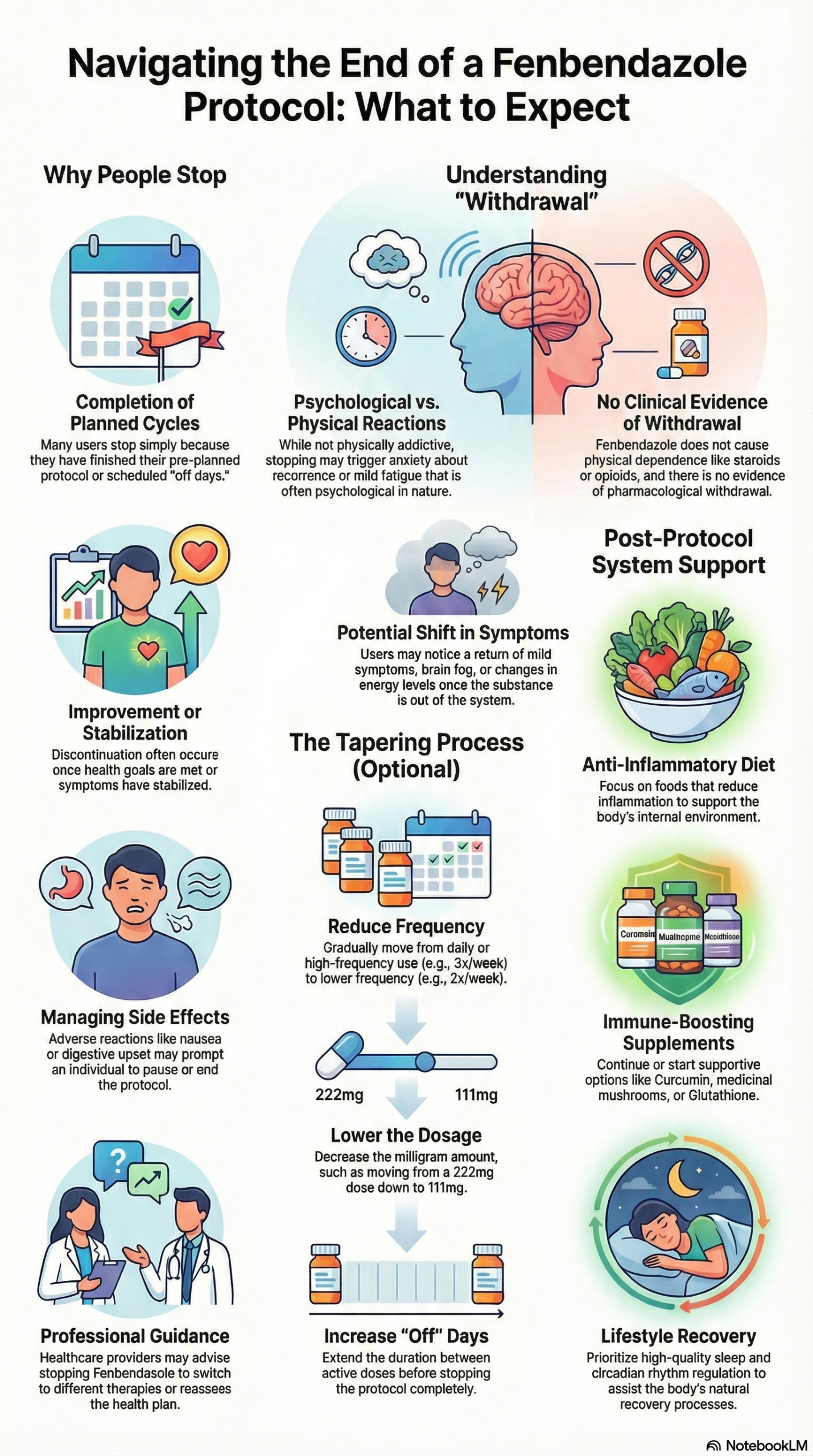
Whether you stop due to protocol completion or side effects, you can support your body in other ways:
- Diet: Focus on anti-inflammatory foods
- Sleep: Prioritize recovery and circadian rhythm
- Supplements: Continue immune-boosting options like curcumin, medicinal mushrooms, or glutathione
- Mindset: Anxiety about stopping is normal; talk to a counselor or health coach if needed
Remember, Fenbendazole is just one piece of a larger wellness journey.
Key Takeaways
- Stopping Fenbendazole does not cause withdrawal, but some notice shifts in energy or symptoms
- Experiences vary depending on the condition being treated and overall health
- Tapering is not required but can be used for personal comfort
- Supporting the immune system and body terrain after stopping is wise
- Work with a trusted health professional when making any protocol changes